
Contextual Security
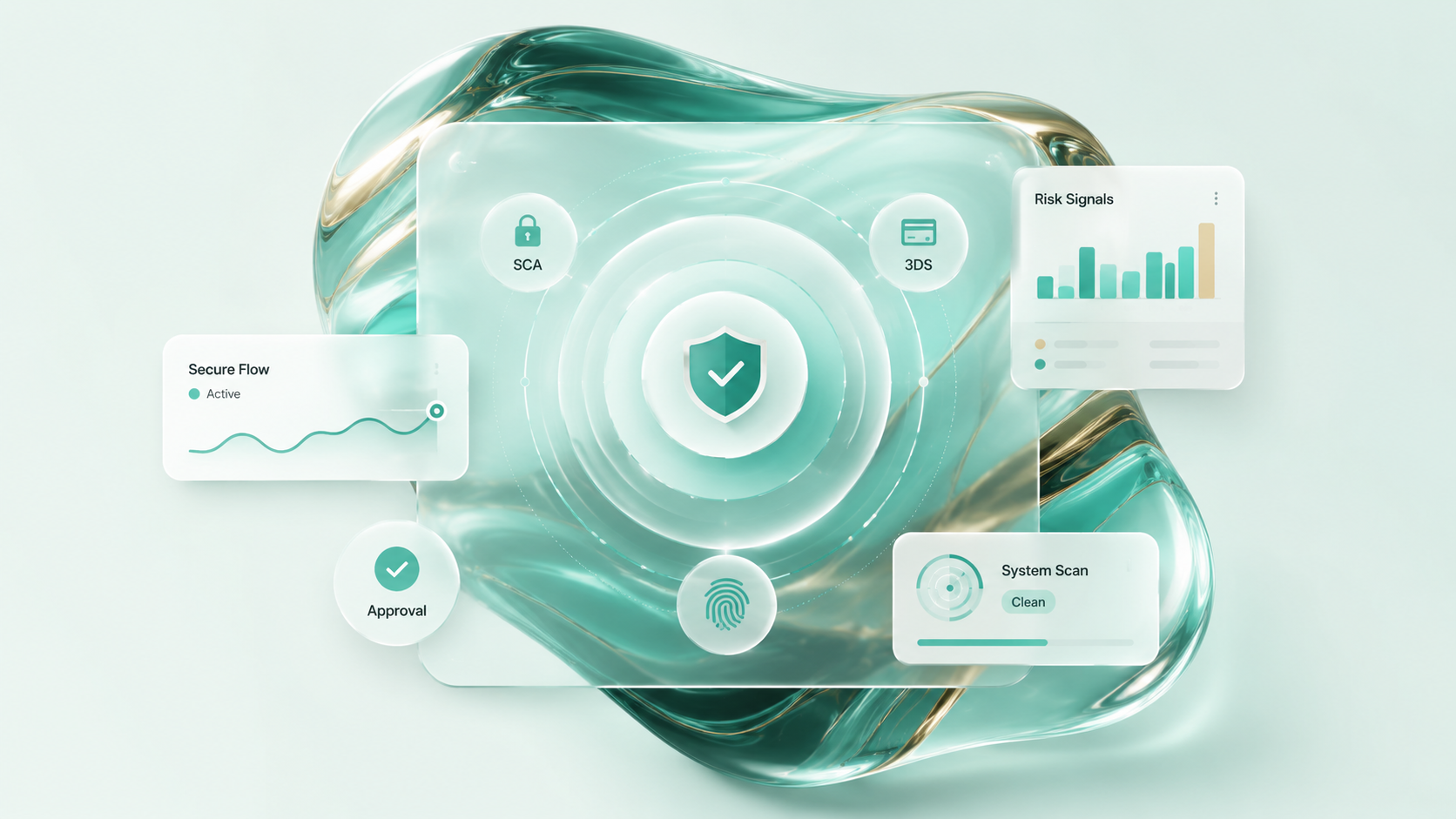
Security Should Not Treat Every Transaction the Same
Modern payment security often begins with a simple assumption: more checks create more protection.
In practice, applying the same level of friction to every transaction can create a different problem. Legitimate customers face unnecessary verification, conversion drops, and support teams deal with payments that were delayed or rejected without a clear reason.
Strong security is not about treating every transaction as suspicious.
It is about understanding which transactions deserve more attention.
Context changes the decision
Two transactions can have the same value and use the same payment method, yet represent completely different levels of risk.
One may come from a returning customer using a recognised device and a familiar payment pattern. The other may come from a new device, a different location, and behaviour that does not match previous activity.
The payment amount alone does not explain the difference.
Context does.
That context may include the customer’s history, device, location, transaction velocity, issuer response, payment method, market, and the wider behaviour surrounding the transaction.
Security becomes more accurate when these signals are evaluated together rather than through one fixed rule.
Not every transaction needs the same challenge
Authentication is essential, but it should not automatically create the same journey for every customer.
A familiar, low-risk transaction may be able to move through the payment flow with minimal interruption. A transaction showing unusual behaviour may require additional authentication or a closer risk review.
This is the purpose of risk-based authentication.
The objective is not to remove security checks. It is to apply them where they add value.
When every transaction receives the same challenge, the system becomes secure in theory but inefficient in practice. Customers experience friction even when there is no meaningful risk, while genuinely suspicious behaviour may still pass if the rules are too broad.
Security needs to be selective to be effective.
A decline is not always a security decision
Payment teams often see the final outcome without seeing the full reason behind it.
A transaction may fail because of an issuer decision, a technical response, incorrect credentials, a provider timeout, or a risk rule. These outcomes may appear similar in reporting, but they should not trigger the same response.
Automatically retrying every failed transaction can create unnecessary cost and additional risk.
Blocking every unusual transaction can remove legitimate revenue.
The system needs to understand what happened before deciding what should happen next.
That means separating technical failures from risk signals, recoverable declines from final declines, and unusual behaviour from actual fraud.
The response matters as much as the detection
Security is not only about identifying risk.
It is also about choosing the correct action.
Depending on the context, the system may allow the transaction to continue, request additional authentication, apply a different route, limit further attempts, or reject the payment.
A fixed response ignores the differences between transactions.
A contextual response uses the available information to protect the payment flow without creating unnecessary disruption.
This is where orchestration becomes important.
Security controls are often spread across multiple providers, processors, fraud tools, and authentication systems. Without a coordinated layer above them, each system sees only part of the transaction.
Orchestration connects those signals to the payment decision.
It helps ensure that authentication, routing, retries, and risk controls do not operate as separate actions, but as parts of one transaction strategy.
The goal is better decisions, not more controls
Adding more security tools does not automatically create a stronger payment environment.
If those tools operate independently, they may create duplicated checks, conflicting rules, and inconsistent customer experiences across markets and providers.
The real value comes from coordination.
Encryption protects sensitive information. Tokenisation reduces credential exposure. Authentication confirms identity. Fraud monitoring analyses behaviour. Transaction controls determine the response.
But the payment stack still needs to understand when each layer should become active.
That decision should be based on context, not habit.
Security and performance are not opposites
Payment security is often discussed as a trade-off between protection and conversion.
That trade-off becomes smaller when the system can distinguish between normal activity and genuine risk.
Low-risk transactions can move with less friction. Higher-risk transactions can receive stronger controls. Operational teams gain clearer reasons behind each decision, and customers are challenged only when the context justifies it.
The strongest payment security does not make every transaction more difficult.
It makes every decision more precise.
Because modern security is not about asking every transaction the same question.
It is about knowing which questions each transaction needs to answer.
Simple. Fast. Reliable.
At Paylinq, we deliver a seamless experience with full transparency and effortless operations, so payments just work.
Social Handle
