
Payment Security
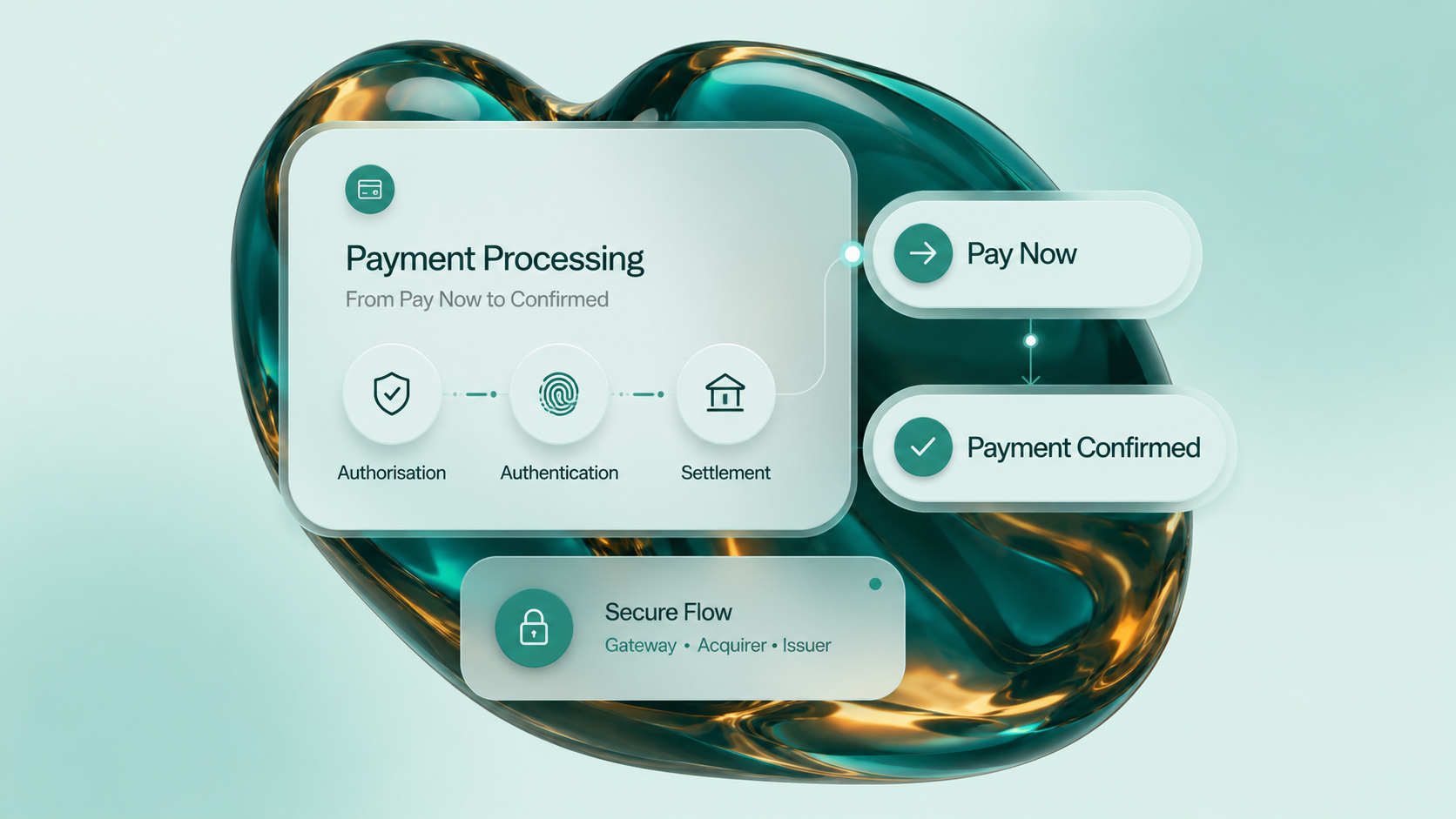
Tokenization and Encryption: The Two Pillars of a Resilient Payment Stack
A practical look at how these two technologies divide the work of protecting payment data, and why modern merchants need both.
Payment security has quietly shifted from a back-office concern to a front-line business priority. Customers expect their card details to be safe. Regulators expect proof. Investors expect operational resilience. And every merchant operating across borders is now stitching together more providers, more rails, and more data flows than ever before.
In the middle of this complexity sit two terms that get tossed around as if they were synonyms: tokenization and encryption.
They are not. They protect different things, in different ways, at different stages of the payment lifecycle. Confusing them, or treating one as a substitute for the other, leaves real gaps in a payment stack. The merchants who get this right treat the two as a pair, each doing the job the other cannot.
The Real Cost of Getting Security Wrong
Before getting into the mechanics, it helps to anchor the conversation in numbers.
IBM's 2025 Cost of a Data Breach Report puts the global average cost of a single breach at $4.44 million, with U.S. organisations averaging closer to $10.22 million. Those figures only capture the directly measurable damage: incident response, fines, legal exposure, system remediation. They don't fully capture the long tail: lost customers, depressed conversion rates, partners who decline to renew, and regulators who start paying closer attention.
For payment businesses specifically, the stakes compound. A breach doesn't just leak data. It interrupts revenue, freezes processing relationships, and can trigger contractual cascades with acquirers and card schemes.
This is why the conversation has shifted from "do we need security" to "how do we layer it."
Encryption, Plainly Explained
Encryption is a transformation. You take readable data, a 16-digit card number, say, feed it through an algorithm with a cryptographic key, and what comes out the other side is unreadable to anyone without the matching key.
Crucially, the data still exists. It's just disguised. With the right key, you can reverse the process and recover the original.
In payments, the most familiar form is point-to-point encryption. The card data gets encrypted at the moment of capture, the terminal, the checkout page, the SDK, and stays encrypted as it travels across networks until it reaches a system authorised to decrypt it, typically the processor.
Encryption shines when:
- Data needs to move between systems
- Communication channels could be intercepted
- You need to protect information in transit between trusted endpoints
Its limitation is structural. Encrypted data is reversible by design. Anyone who obtains both the ciphertext and the key holds the original. Key management therefore becomes one of the highest-stakes operational responsibilities in the entire stack.
Tokenization, Plainly Explained
Tokenization solves a different problem. Instead of disguising sensitive data, it removes it from the picture entirely and substitutes a stand-in.
A card number becomes a token, a string of characters that, on its own, means nothing. There's no algorithmic relationship between the token and the original number. You can't "decrypt" a token because there's nothing mathematically embedded inside it. The actual card data lives in a hardened, isolated environment, often called a token vault, and only systems with explicit authorisation can ask the vault to resolve a token back to the underlying value.
This changes the security posture in a fundamental way. Even if an attacker gets the entire token database, they have nothing usable. Tokens, on their own, can't be charged, replayed, or sold.
Tokenization is most valuable for:
- Data that needs to be stored long-term
- Data that needs to be referenced repeatedly, recurring billing, refunds, loyalty
- Reducing the systems that ever touch raw cardholder data
- Cutting down the surface area that compliance frameworks have to cover
So What's Actually Different?
The simplest way to hold the distinction in your head:
- Encryption protects data while it's moving.
- Tokenization protects data while it's sitting still or being referenced.
Encryption keeps the data intact but unreadable. Tokenization removes the data and leaves a placeholder. Encryption is reversible by design; tokens are reversible only through a controlled lookup that the attacker can't replicate.
A useful mental image: encryption is an armoured truck transporting cash between vaults. Tokenization is replacing the cash with claim tickets that are worthless to anyone who isn't holding the matching ledger.
"Which One Should We Use?" Is the Wrong Question
This comes up in nearly every architecture conversation, and the framing itself causes problems. It implies a trade-off where there isn't one.
Encryption alone leaves you with sensitive data sitting in storage, even if it's protected by a key. Tokenization alone leaves you with raw card data flowing across networks before it ever reaches the vault.
The strong answer is to use both, deliberately, at the points where each is most effective:
- Encrypt at capture and across every transit hop
- Tokenize before data lands anywhere it might rest, repeat, or replicate
A modern payment stack treats these as complementary controls, not alternatives.
Tokenization and PCI DSS Scope
Compliance is where tokenization earns much of its reputation.
PCI DSS sets out detailed requirements for any system that stores, processes, or transmits cardholder data. The cost of compliance scales with the size of that footprint. The more systems handle live card data, the more systems need to be assessed, hardened, monitored, and audited.
Tokenization can shrink that footprint dramatically. Once a card number is replaced with a token at the edge, the systems downstream that only ever see the token may, depending on implementation and assessor judgment, fall outside certain PCI DSS scope obligations. That doesn't make compliance go away, it makes it cheaper, narrower, and easier to maintain.
The exact reduction depends heavily on how tokenization is deployed and on the determination of a qualified security assessor. This isn't a self-certification exercise. It's a design conversation that should involve your QSA early.
Encryption alone rarely produces the same scope reduction, because encrypted card data is still considered cardholder data under PCI rules.
Where Tokenization Already Lives in the Customer Experience
Even where shoppers don't see it, tokenization is doing quiet work in most of the payment moments they take for granted:
- Saved cards on file for the next purchase
- One-click and express checkouts
- Subscriptions and recurring billing
- Mobile wallets and device-bound credentials
- Repeat refund and dispute handling against the original transaction
In every one of these cases, the merchant is referencing a payment instrument without holding the actual card number. The user gets a frictionless experience. The merchant gets a smaller risk surface. The vault carries the sensitive load.
Why Layering Matters More as Stacks Get More Complex
Five years ago, a typical merchant might have worked with one acquirer, one gateway, and one fraud tool. Today, the same merchant is more likely running multi-acquirer routing, several alternative payment methods, regional processors, fraud orchestration, and analytics layered across all of it.
Every additional integration is another place data could leak, be misconfigured, or be over-permissioned.
Layered security becomes the only realistic answer. Encryption secures the lines between components. Tokenization makes sure that what travels along most of those lines isn't sensitive in the first place. Each layer compensates for the failure modes of the others.
This is the same principle that has guided physical security for centuries: depth, redundancy, and the assumption that any single control can fail.
Security as a Growth Enabler, Not a Tax
It's tempting to frame security purely as a cost, overhead that slows things down. The merchants who scale most successfully tend to flip that view.
Strong tokenization and encryption practices make it easier, not harder, to:
- Add new payment methods without re-architecting
- Enter new markets with different regulatory regimes
- Switch or add acquirers without re-collecting card details from customers
- Run sophisticated retry, routing, and fraud logic on stable, portable references
In other words, the same architecture that reduces breach risk also reduces the cost of every future change.
Bringing It Together: Orchestration as the Connective Tissue
Tokenization and encryption are foundational, but they don't operate in isolation. In a modern setup, they sit inside a broader payment orchestration layer that handles routing, retries, fraud signals, reconciliation, and reporting across multiple providers.
That broader layer is what turns security primitives into operational leverage. Encrypted, tokenized data flows through orchestration logic that can:
- Route transactions intelligently across acquirers
- Apply real-time fraud and risk rules
- Surface analytics without exposing raw data
- Handle chargebacks and disputes against tokenized references
- Maintain continuous monitoring across the entire stack
Each capability becomes more powerful, and safer, when the underlying data has already been minimised and protected.
The Bottom Line
Tokenization and encryption are not rivals. They're a pair.
Encryption keeps payment data unreadable while it moves. Tokenization keeps it absent from anywhere it doesn't strictly need to be. Used together, they shrink risk, simplify compliance, and free a payment stack to grow without each new integration adding proportional exposure.
For merchants thinking about the next stage of their infrastructure, the right question isn't encryption or tokenization. It's how cleanly are these two working together across every system that touches a payment.
At Paylinq, we help merchants build payment infrastructure where security, performance, and scalability reinforce each other rather than compete. By combining tokenization, encryption, and full payment orchestration, our clients operate confidently across complex, multi-market environments. Talk to our team to map out how we can support yours.
This article is for informational and educational purposes only and does not constitute financial, legal, tax, or compliance advice. Specific implementation decisions, particularly around PCI DSS scope, should be made in consultation with a qualified professional or assessor. References to third-party services or providers are illustrative and do not constitute endorsement. The authors and publisher accept no liability for actions taken based on this content. Information may become outdated.
Simple. Fast. Reliable.
At Paylinq, we deliver a seamless experience with full transparency and effortless operations, so payments just work.
Social Handle
